Life Mapper Knowledge Platform
Learn how Europe maps, assesses and restores its marine habitats
Short pages written by the researchers of the Life Mapper project, in four chapters that go from mapping the seabed to planning its restoration. In each chapter, guided paths take you through a few pages on one topic, for the kind of reader you are. Every page shows its sources, so you can check them and go further.
- chapters
- 4
- guided paths
- 9
- pages
- 27
- sources
- 42
How it works
Chapters, paths, pages and their sources
The platform is built in layers. You choose a big question, then a short route through it, then read pages that each answer one smaller question and point to the evidence behind it.
-
Pick a chapter
Four chapters, four big questions: where the habitats are, what state they are in, what restoring them costs, and where and under which rules to restore.
-
Follow a guided path
Inside each chapter, researchers have composed short paths of a few pages, each on one topic and written for planners, researchers, students or curious citizens. Pick the one that fits you; the arrows take you from page to page.
-
Read a page
Each page answers one question in a few minutes, in plain language, with images, maps and videos. Pages are written by researchers of the Life Mapper partners and reviewed before they go live.
-
Go deeper
Every page ends with its sources — papers with their DOI, datasets, guidelines, case studies — and files to download. Pages about a sea open the Life Mapper geoportal on that area.
No account needed. The pages you have read are remembered on this device only, and each path shows how far you got.
The learning path
Four chapters, from the map to the plan
Start from the question you have. Each chapter offers its guided paths; pages are also tagged by habitat, region and method, so the search can follow a thread across chapters.
-
Chapter 1
Mapping and data
Where are the habitats, and how do we know?
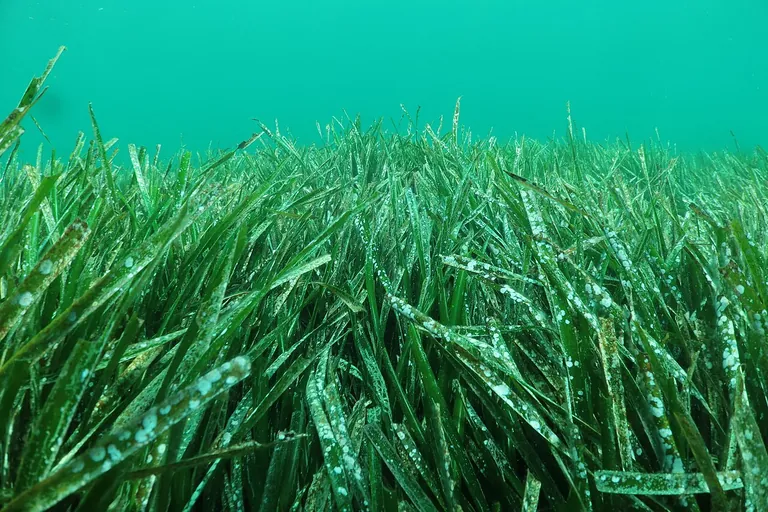
Where Europe's marine habitats are, and how we know: the survey methods that see the seabed, how maps are checked and named, and where the data lives.
3 paths Open chapter → -
Chapter 2
Scientific Insights
What state are habitats in, and does restoration work?
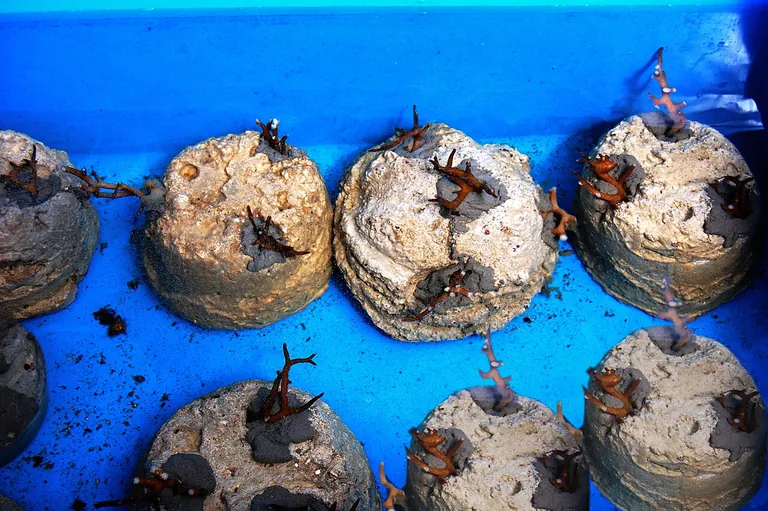
What state the habitats are in and whether restoration works: condition indicators, monitoring methods and what the evidence can and cannot show.
2 paths Open chapter → -
Chapter 3
Economics
What does it cost, and what is it worth?
What marine restoration costs, what it is worth and who pays: costs of the work and of monitoring, the value of ecosystem services, and the funding available.
2 paths Open chapter → -
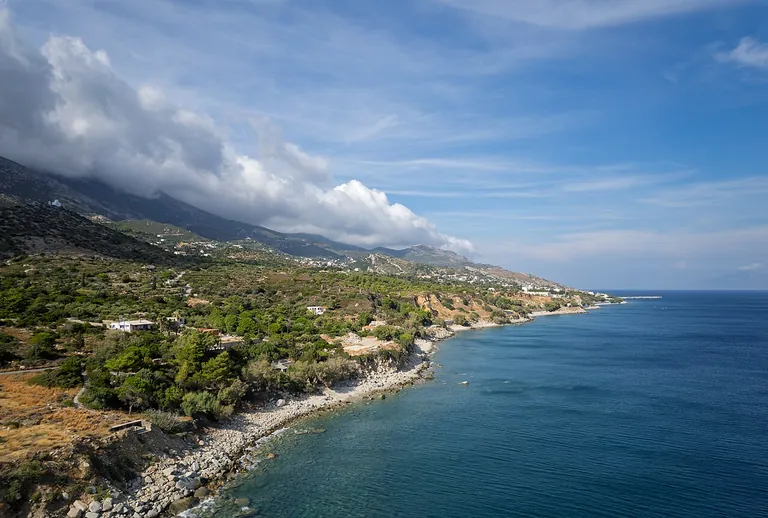
Chapter 4
Policy & Planning
Where should we restore, and under which rules?
Where to restore and under which rules: what the Nature Restoration Law asks at sea, how it connects to Natura 2000 and the Marine Strategy, and how sites are chosen and plans written.
2 paths Open chapter →
Where to start
Written for different readers
Every guided path says who it is written for. Pick your profile to see the paths meant for you, chapter by chapter.
-
Planners and public officers
Start with what EU law asks at sea, then see how restoration sites are chosen.
6 paths in 4 chapters -
Researchers
Jump to the evidence: condition indicators, monitoring and what restoration achieves.
5 paths in 4 chapters -
Students
Start from the basics: the introductory paths assume no prior knowledge.
3 paths in 2 chapters -
Curious citizens
Why the sea floor matters, and how we know what lives on it, in short reads.
3 paths in 3 chapters
New on the platform
Recently published pages
-
Scientific Insights
Showcase: citing scientific papers
Four real papers on seagrass, catalogued from their DOI: how they appear in a page, in the sources box and on their own catalogue page.
Intermediate 5 min read
-
Policy & Planning
Showcase: datasets, maps and downloads
How datasets, map layers and downloadable files appear on a page and in the catalogue, with sample files in CSV, GeoJSON and PDF.
Introductory 4 min read
-
Mapping and data
Showcase: how a knowledge page is built
A sample page that uses every block a researcher can add: text, image, gallery, video, highlights, quote, map, sources and downloads.
Introductory 5 min read
Sources
The library behind the pages
Every page cites its sources. Together they form a searchable library of papers, datasets, guidelines, case studies and platforms, filterable by habitat, region and method.
- Case study
Artificial Reef Structures in the Bari Canyon
The 3D-printed EcoReefs artificial structures were deployed in the Bari Canyon (South Adriatic Sea) to support the ecological restoration of degraded cold-water coral (CWC) habitats. The main objectives were to enhance habitat structural complexity by providing stable hard substrate and promote the recruitment, growth, and long-term persistence of Madrepora oculata and Desmophyllum pertusum. The intervention aims to restore the physical habitat architecture and ecological functions characteristic of healthy CWC ecosystems.
- Paper
Performance Assessment of Posidonia oceanica (L.) Delile Restoration Experiment on Dead matte Twelve Years after Planting—Structural and Functional Meadow Features
- Paper
Habitat suitability model for predicting the occurrence of scleractinian cold-water corals in the Gulf of Naples (Tyrrhenian Sea): A tool for restoration planning and governance of deep-sea ecosystems
- Case study
Seabed litter removal in the Bari Canyon
Within the LIFE DREAM project, an experimental activity to remove seabed litter physically impacting cold-water coral habitats was carried out during the ECOREST24 oceanographic campaign aboard the R/V Gaia Blu. A remotely operated vehicle (ROV) was used to identify and recover seabed macrolitter, including plastic bags, batteries and abandoned fishing nets, using robotic manipulators. Building on this and other experimental activities, the project aims to develop a technical protocol for marine litter removal and risk assessment.
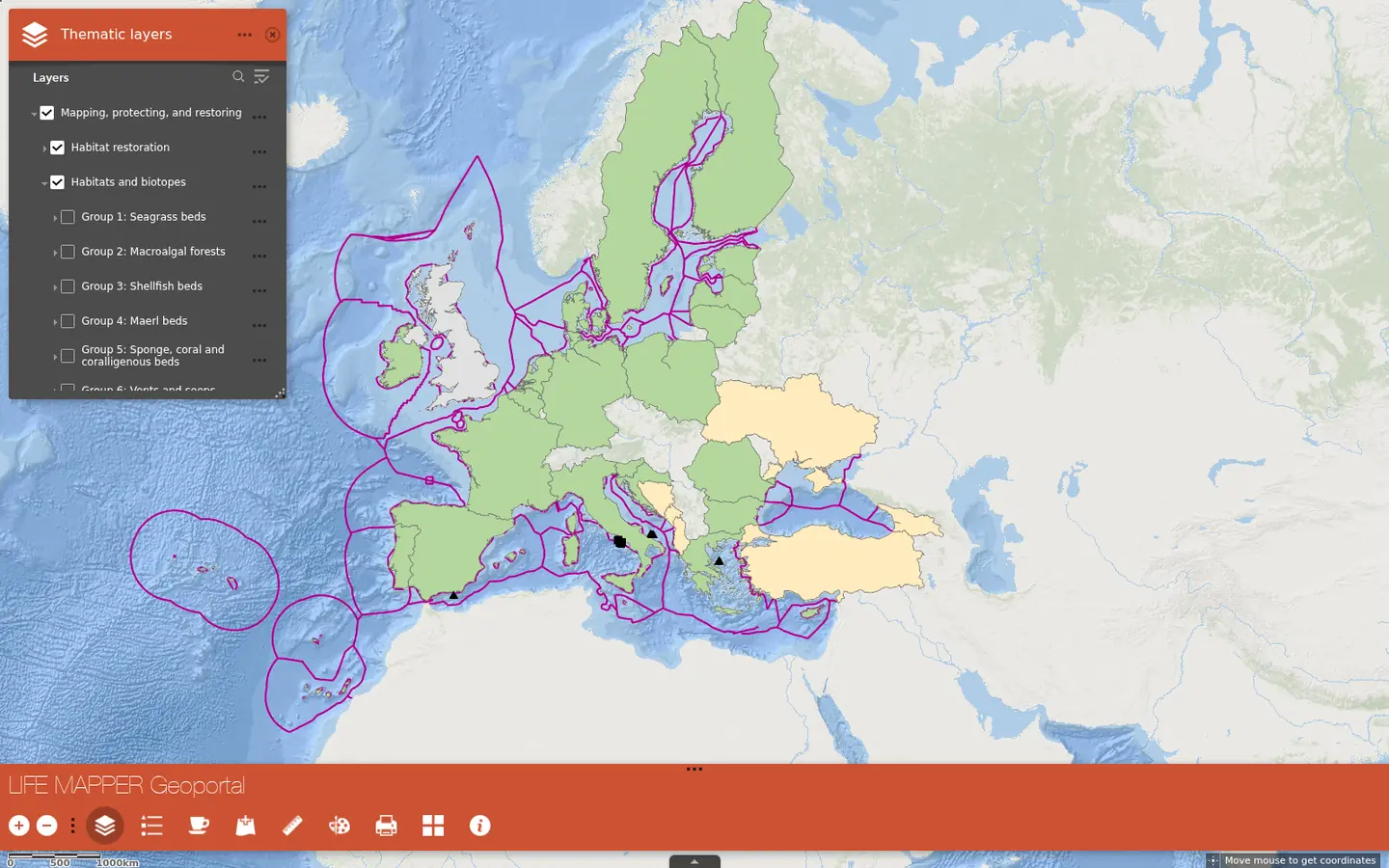
Geoportal
See the habitats you read about
Seagrass meadows, maerl beds, reefs and restoration sites across Europe on one interactive map, served by CNR-ISMAR. Open a layer straight from the page that explains it.
Are you a Life Mapper researcher?
Write a page from your work, or compose a guided path through the pages of your chapter. You draft in the editor, an editor of your institution reviews and publishes, and the page goes live with your sources attached.